Window Film for Landlords: Complete 2026 Guide
For landlords, window film is a coating applied to glass to add privacy to a rental property. The right choice depends on the line of sight, the type of glass, and the installation conditions: choose a frosted film suited to the need, without assuming it is suitable for all windows or that it can be removed without precautions.
- Landlord window film: choose frosted based on the line of sight, then check the glass compatibility.
- Décor Imprimé offers plain and decorative privacy films to personalize a home.
- Measure each window separately and verify the result under the home's lighting conditions.
- Document the installation, maintenance, and removal before returning the home to the tenant.
Why window film matters for landlords
A bathroom window overlooking a common courtyard and a glass door opening onto a walkway do not present the same problem. In a rental property, you must also think about the next occupant, maintenance, and future work on the windows.
Address the line of sight first; then choose the pattern. A decorative film does not automatically meet the need for privacy simply because it has a design. The proportion of transparent areas and the placement of the coating also matter.
To prepare for your 2026 work, start by identifying the relevant uses in this guide on frosted window film for the home. Then, consider the constraints of the home: access to the glass, the opening of the sash, and the view from neighboring spaces.
The film remains a modification of the glass. It does not repair a leak, a defective seal, or a ventilation problem.
How to choose a film for a rental property
Follow these steps before ordering. You can do the survey yourself with a tape measure, a sketch, and photos; technical checks come next, depending on the window and the selected product.
1. Identify the views to block
Stand in the room, then observe the window from accessible areas outside. Do this with the occupant's permission when the home is occupied. Look specifically for what needs to be hidden from view: the bottom of the room, a shower, or an entire glass door.
A partial strip leaves a portion of the glass clear, but this opening remains a line of sight. More extensive coverage further limits the direct view outside. The right compromise depends on the use of the room, not just the facade.
In a building with several units, note the needs separately. Two apartments with the same layout do not necessarily overlook the same spaces.
- Identify the affected walkways, balconies, and neighboring windows.
- Note the sitting and standing positions that need protection.
- Distinguish the desired light from the view to be preserved.
- Photograph only the useful areas, with the occupants' permission.
2. Measure each window and identify the glass
Measure the relevant glass area rather than the exterior dimensions of the frame. Record the width at 3 points: top, middle, and bottom. Do the same for the height, left, center, and right, then keep the values rather than immediately choosing a cut size.
Indicate the unit on each measurement. Do not mix inches and centimeters in your 2026 work sheet. The margins, edge gaps, and cutting method must follow the instructions of the selected product.
Also identify the glass using available documents or by contacting the window supplier. Confirm the film's compatibility with this glass, its exposure, and any treatments.
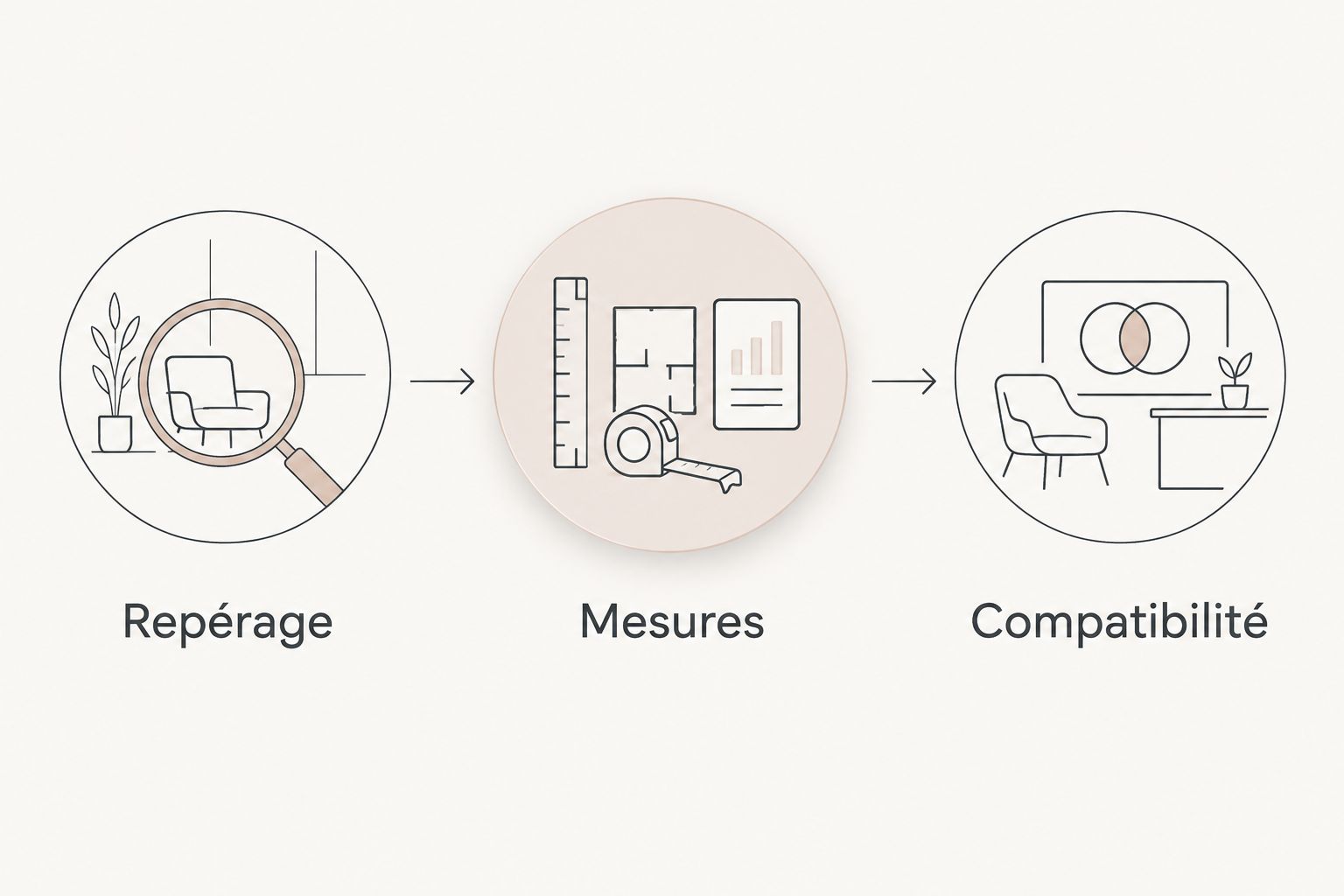
- Survey: associate each window with a room and a need.
- Measurements: write the width, height, and unit on a sketch.
- Compatibility: record the type of glass and the confirmed restrictions.
- Identify the seals, handles, and moving parts to preserve.
3. Choose a finish based on the use of the home
Start by comparing the frosted areas and transparent areas on the product visuals. A plain finish is a simple starting point; a pattern adds a decorative intent. Neither of these choices exempts you from checking the result in front of the window concerned.
Décor Imprimé privacy films are suitable for landlords looking for a plain or decorative frosted finish. Their advantage is bringing these two approaches together; their limitation for your project is that a product visual does not replace on-site validation.
The plain frosted film meets the need for visual discretion. Choose this option if you want the glass to remain understated in the decor, then confirm its characteristics and installation conditions.
- Compare the frosted and transparent portions.
- Evaluate the pattern from the usual viewing distance.
- Choose a consistent finish between the windows of the same room.
- Check the exact product's installation and removal method.
4. Validate the pattern in the room
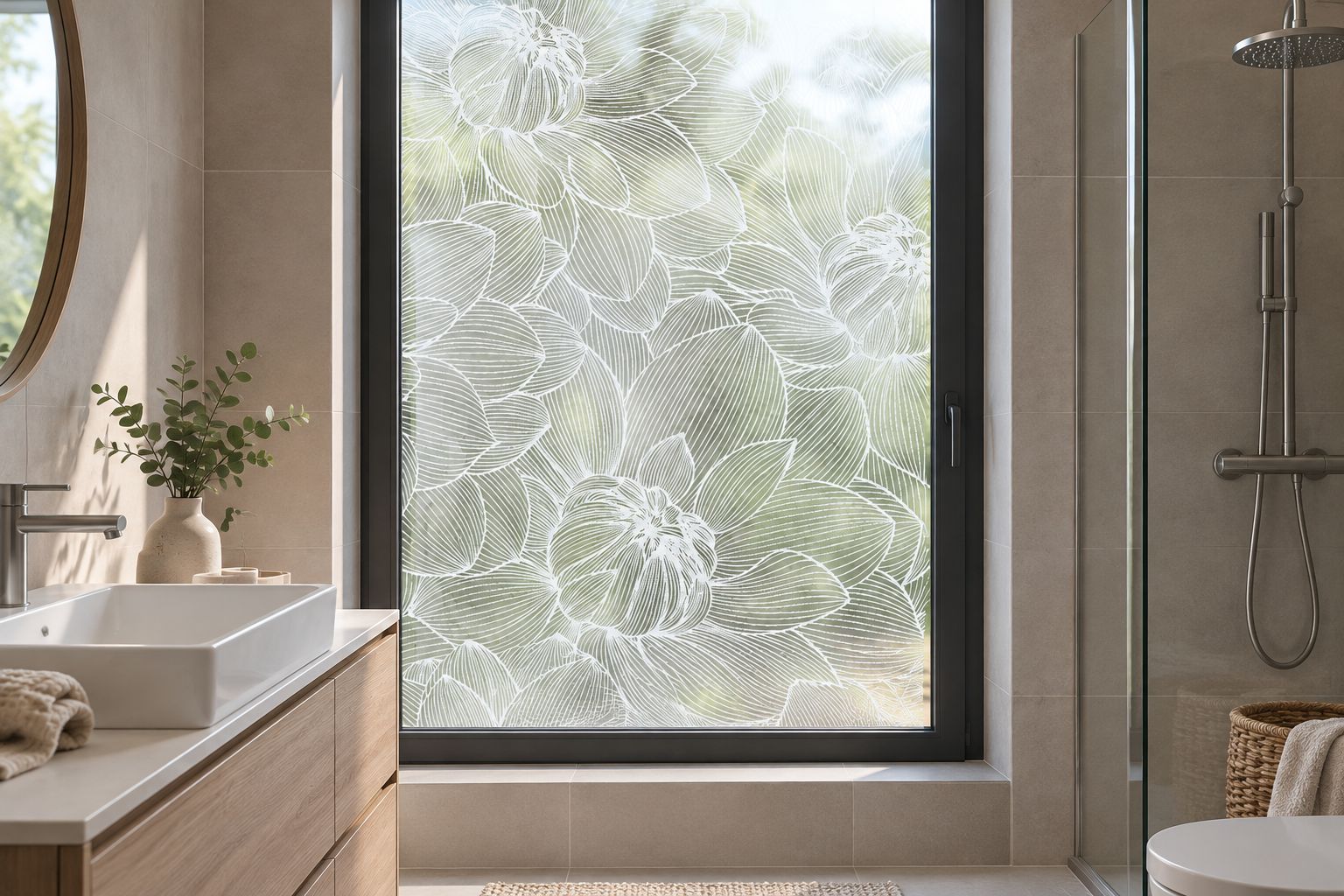
For a decorative effect, the Solange privacy window film offers an original design made locally. The "Made in Quebec" mention here accompanies a choice of origin; it does not replace privacy and compatibility checks.
Observe the pattern with the materials already present: ceramic, paint, wood, and hardware. In a rental property, a very bold pattern also becomes a component of the decor that the next occupant will have to incorporate.
Décor Imprimé also offers a July window film sample of approximately 8 in × 8 in, intended to validate the pattern and texture. A small sample helps examine the material without representing the effect of a fully covered window.
- Compare the pattern with the room's permanent finishes.
- Examine a sample when one is available for the model under consideration.
- Check the direction of the design before ordering.
- Avoid inferring the actual privacy from a decorative photo.
5. Confirm the installation before preparing the glass
Read the instructions for the exact product before taking out the tools. An adhesive film, a static decoration, and another window coating should not be treated as interchangeable products.
Inspect the glass and its surroundings. If you see a crack, a deteriorated seal, or a moisture problem, have the situation assessed before adding a coating. Cleaning and installation do not correct these defects.
Do not apply a method found for another film. Preparation, tools, any liquids, and working conditions depend on the applicable instructions. If any point remains uncertain, send the product reference and window information to the manufacturer concerned.
- Confirm the side of the glass intended for installation.
- Prepare the tools indicated in the instructions.
- Clean using a method compatible with the glass and the coating.
- Protect neighboring surfaces during the work.
- Follow the cutting and finishing instructions.
6. Check the result before returning the home
A completed installation is not enough: check that the film meets the initial need. Observe the window from the identified walkways, then from the room. Repeat with the interior lights on when the outdoor conditions change.
Keep 2 reference photos: an overall view and a close-up of the edges. Avoid including the tenant's personal effects. These images serve to document the condition of the installation, not to prove technical performance.
Add the observations to the home file in 2026. If an area remains visible when it should have been protected, correct the choice of coverage or product before considering the project finished.
- Check the truly problematic lines of sight.
- Check the edges and visible defects according to the instructions.
- Operate the window to confirm its functionality.
- Note any reservations and necessary corrections.
7. Prepare for maintenance and eventual removal
Create 1 sheet per home with the exact reference, measurements, installation date, and saved instructions. This sheet facilitates a later intervention, especially if several people manage the building.
Provide the tenant with maintenance instructions taken from the installed product. Do not promise trace-free removal if this property is not confirmed for the reference and support concerned. The removal method deserves as much attention as the installation.
If the home belongs to a condominium or has particular restrictions, check the applicable rules before the work. For any questions about authorizations or responsibilities, consult the relevant documents rather than assuming a film is automatically permitted.
- Archive the reference and the manufacturer's instructions.
- Note the authorized cleaning products.
- Specify who to contact before a modification or removal.
- Record the rules applicable to the home.
- Update the sheet after each intervention.
Which option to choose for a rental property?
The table distinguishes a discreet finish, a decorative approach, and a validation tool. The sample does not replace a film intended to cover the window. Choose according to the objective, then check the current characteristics of the model with Décor Imprimé.
| Option | Best for | Useful asset | Limitation to check |
|---|---|---|---|
| Plain privacy window film | A sober decor where the glass should remain discreet | Frosted finish without a design | The appearance and privacy must be validated in the home |
| Solange privacy window film | A window that participates in the decor | Original design made locally | The pattern requires coordination with existing finishes |
| July window film sample | Examining the pattern and texture before choosing | Small observation format | Does not represent a fully covered window |
To standardize several homes, start by validating a representative installation. Then reuse the selected reference only after confirming the measurements and constraints of each window: the same model does not make the glass identical.
Here are the two films compared for window coverage, with their official visuals.


Errors to avoid as a landlord
Ordering for the entire building based on a single window
Similar windows may have different dimensions and constraints. Record each window before grouping the orders. Your tracking sheet must distinguish the home, the room, and the glass concerned, without relying on your memory.
Confusing seasonal decoration with permanent privacy
Decorative static films dress a window, but their presence does not mean they block necessary views. For a bathroom or a door exposed to a walkway, assess the actual coverage rather than just the theme of the design.
Promising unverified reversibility
The characteristics of a product do not extend to an entire category. Avoid telling the tenant that any film can be repositioned or removed without traces. Keep the precise instructions and confirm the precautions related to the support before giving this assurance.
Neglecting the occupant's needs
Choosing a window film based solely on its exterior appearance risks obscuring a view that is appreciated from inside the room. Discuss the need with the occupants when the home is inhabited, then check the required permissions. In a vacant home, still assess daily usage rather than just the appearance during the visit.
FAQ
Which frosted window film should I choose as a landlord?
Choose a frosted film based on the views that need to be blocked and the glazing characteristics. A plain finish meets a need for simplicity; a decorative pattern also requires approval from inside the room.
Is frosted film suitable for all windows?
No, compatibility must be confirmed for the glazing and the product in question. Identify the glass, any treatments it may have, and its exposure before seeking confirmation.
Should I cover the entire window in a rental property?
No, the coverage should correspond to the lines of sight that need to be blocked. However, a partial installation leaves transparent sections whose effect must be checked from walkways and neighboring windows.
How can I check privacy at night?
Observe the window from the relevant viewpoints with the interior lights on. Do not assume the nighttime result based on a check performed only in broad daylight.
Can window film be removed without residue?
Removal without residue is not a property that can be assumed for all films. Check the instructions for the exact product and the precautions specific to the glass before making a commitment to a tenant.
Is a sample enough to choose a privacy film?
A sample helps examine the pattern and texture, but does not show the effect of a fully covered window. Supplement this observation by validating the transparent areas, coverage, and lighting conditions.
What instructions should be given to the tenant after installation?
Provide the maintenance instructions for the installed product and specify who to contact before removal. Also keep the product reference, installation date, and photos of the initial condition in the property file.
One final tip
For your 2026 rentals, keep a sketch of the area to be protected, not just the dimensions of the glass. This distinction prevents having to start the entire process over if you later replace the pattern or film.
The decor may change; the common walkway in front of the window remains in the same place. A useful file therefore describes the problem to be solved as much as the product installed. This is the best basis for explaining the choice to the next property manager or occupant.