Can you apply window tint to already tinted glass?
Yes, you can apply window film to tinted glass only if the combination of the glazing, its tint, and the new film is confirmed to be compatible. Glass with an integral tint and glass covered with an old film do not provide the same surface. Before installation, have the risks of thermal stress, adhesion, and warranty conditions checked: testing a small corner is not enough.
- Applying window film to tinted glass requires a compatibility check, not just an adhesion test.
- Décor Imprimé offers decorative frosted films; choosing one does not replace the validation of the existing glazing.
- An old tinted film creates an additional layer: do not cover it without technical approval.
- For double-pane windows, have the glass composition and installation side confirmed before any installation.
Why this check matters
Your goal may simply be to hide a view of the bathroom or make a glass door more private. However, adding a layer to glass also affects how the glazing behaves in the sun and the surface that will receive the adhesive.
Décor Imprimé is suitable for homeowners looking for a decorative frosted film made in Quebec. To discover the Décor Imprimé range, start by identifying your window: the pattern comes after compatibility, never before.
In 2026, keep the exact reference of the film you are considering along with the glazing information. This precaution allows you to ask for a response regarding your actual installation, rather than a general opinion on tinted windows.
Can window film be applied to glass that is already tinted?
The answer first depends on what gives the glass its color. Do not decide based on its apparent tint. Two windows that look equally dark may have different compositions and treatments.
| Existing situation | Advantage to retain | Limitation to check | Decision before installation |
|---|---|---|---|
| Glass with an integral tint | No old film to cover | Thermal compatibility with the new film | Have the glass-film combination validated |
| Glass covered with a tinted film | Existing treatment already in place | Adhesion between layers, future removal, and thermal behavior | Do not layer without explicit confirmation |
| Glazing with a low-emissivity coating | Function of the existing glazing | Position of the coating and manufacturer restrictions | Identify the composition and installation side |
| Glazing of unknown composition | No disassembly required to begin research | Compatibility cannot be confirmed by sight | Postpone installation until identified |
These situations may occur together. A window may be double-paned, have a low-emissivity coating, and have had a film applied after installation.
Approval to apply a film to clear glass therefore does not automatically authorize its application to your tinted window. Ask for confirmation that mentions the existing glazing, the new film, and the side intended for installation.
Glass with an integral tint: check the glass itself
When the tint is part of the glass, there is no colored film to peel off. The new film is nevertheless applied to glazing whose properties must be taken into account.
Tinted glass absorbs some solar energy. Adding a film can change this balance; the visible color of the film alone cannot assess this change.
The right approach: find the glazing data sheet before choosing the finish. Consult your invoice, construction documents, or the window manufacturer. A photo helps explain the situation, but does not reveal the full composition of the glass.
For your 2026 project, also note the window's orientation and shaded areas. This information gives the manufacturer the necessary context to review your request.
Old tinted film: avoid unvalidated layering
A film already installed becomes the support for the new layer. You are no longer simply sticking a film to glass: you are creating an assembly whose adhesion also depends on the condition of the first film.
A surface that appears smooth may have scratches, cleaning residue, or a coating incompatible with a new adhesive. If the old film is starting to peel, the new layer will not repair this weakness.
Layering also complicates removal. When removing the decorative film, you risk pulling off the tinted layer underneath; therefore, do not assume that each layer will remain independent.
Keep the old film only if its layering is expressly authorized. Otherwise, have the removal options examined or choose a covering that does not stick to the glazing.
Why compatibility varies
The acceptance of a film does not depend solely on its decorative function. Here is the information to gather to obtain a response applicable to your window:
- Glazing composition: single glass or insulating glazing, integral tint, and existing treatments.
- Existing film: reference, installation side, surface condition, and manufacturer instructions.
- New film: precise reference, method of attachment, and installation restrictions indicated in its documentation.
- Solar exposure: orientation, direct sunlight, and partial shading of the glass.
- Condition of the glass: cracks, chips, or visible damage requiring examination before any intervention.
- Warranty conditions: restrictions applicable to the glazing, the window, and each film.
Thermal stress occurs when different parts of the glass do not heat up in the same way. This is why a small area tested without problems does not validate the behavior of the entire window in the sun.
Do not look for a universal tint threshold or a test duration that would automatically give the green light. The right decision is based on the precise assembly, not on a general rule found for another window.
How to check your window before ordering
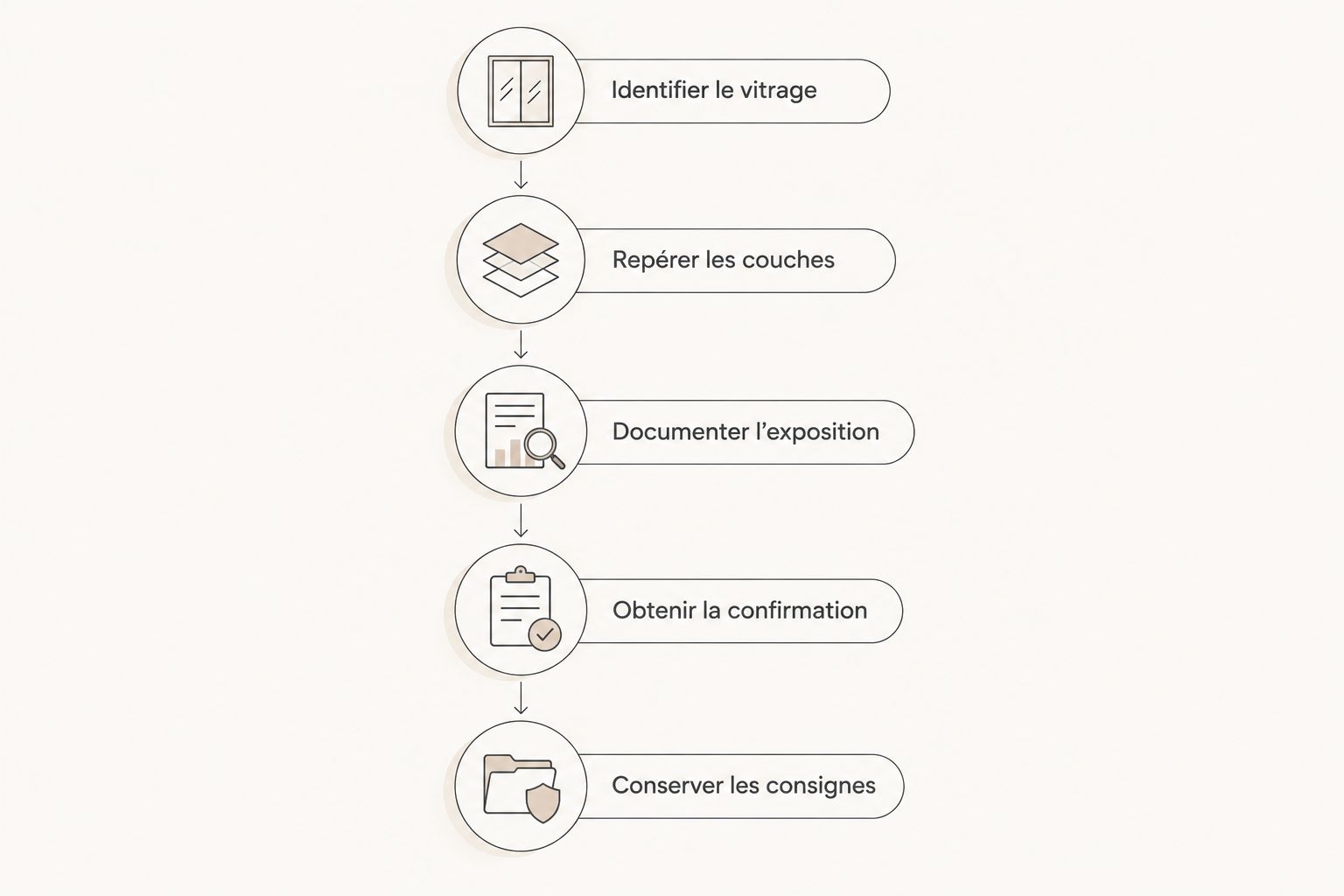
Proceed in this order to avoid choosing a product before knowing its conditions of use. You can then submit a clear file to the window manufacturer and the film supplier.
- Identify the glazing. Find the manufacturer, model, and available documents. Note any visible markings without disassembling the window.
- Locate the layers. Check invoices or ask the previous owner if a film was added. Do not scratch the surface to look for an edge.
- Document the exposure. Photograph the window, its surroundings, and the obstacles that create shade. Specify the room and the side where you want to install the film.
- Obtain confirmation. Submit the reference of the new film and the information gathered. Explicitly ask if an existing layer can remain in place.
- Keep the instructions. Keep the written response, preparation instructions, and installation restrictions with your renovation file.
This process separates identification, validation, and installation. A positive response must concern your configuration, not simply the "window film" category.
If you contact the supplier in 2026, attach the documents still applicable to your window, even if its installation is older. The date of your project does not replace the identification of the glazing.
Should the old tinted film be removed before installation?
Removal is not automatic: it depends on technical validation and the condition of the existing film. A damaged layer or unauthorized layering requires a different decision than simply adding a pattern.
Before removing an old tinted film, identify the treatments present on the glass: a removal method suitable for one surface is not necessarily suitable for another. Have the permitted tools and products confirmed rather than improvising with a blade, solvent, or heat source.
Removal must also leave an acceptable surface for the new installation. Adhesive residue, a damaged surface, or a treatment whose condition remains uncertain prevent moving directly to installation.
If you do not know either the film or the glazing, entrust the assessment to a glazing or film installation professional. In a rental or condominium, also check the necessary authorizations before modifying or removing an existing treatment.
Is a frosted film better suited for privacy?
A frosted film meets a goal of visual privacy, but it does not override the restrictions of tinted glass. Its decorative appearance is not proof of thermal compatibility or adhesion.
Décor Imprimé offers frosted films for home privacy projects. Their benefit is integrating this need into the decor; their limitation, on already treated glass, remains the need to have the surface validated before installation.
Then assess the expected result: what part of the window needs to be covered, which lines of sight need to be blocked, and do you want to maintain a clear view elsewhere? Do not infer the level of privacy from a simple product photo.
For a choice in 2026, clearly distinguish the aesthetic check from the technical check. A sample can help you judge a pattern or texture; it does not certify the compatibility of the complete installation.
What to ask the supplier to obtain a clear answer?
Present your question as a specific case. "Can I add this reference to this glazing, on this side, while keeping this existing film?" calls for a more useful answer than "Does it stick to tinted glass?".
Also ask if the confirmation concerns only adhesion or the entire installation. Good initial adhesion does not answer questions about thermal stress, warranty, and future removal.
You can submit your project information through the contact page. Attach the glazing documents and the considered reference; if the glass composition remains unknown, continue your research with the window manufacturer first.
For a file prepared in 2026, keep the received response with the data sheet of the product actually ordered. If you change films, have the combination reconfirmed rather than reusing the approval given for another reference.
FAQ
Can I stick a frosted film on tinted glass?
Yes, only if the combination of the tinted glazing and the frosted film is confirmed compatible. The apparent tint and an adhesion test are not enough to validate the installation.
How do I know if my window has an integral tint or is covered with a film?
Consult the glazing documents and work invoices to identify the origin of the tint. Do not scratch the surface to look for a film; ask for an assessment if the documents do not allow you to decide.
Can I layer a privacy film and an old solar film?
Do not layer these films without explicit confirmation for the references concerned. Adhesion between layers, thermal behavior, and future removal must be examined.
Does a small test prove that the film is suitable for my window?
No, a small test does not validate the thermal compatibility of the entire window. It also does not replace the verification of installation and warranty restrictions.
Can a double-pane window receive another film?
A double-pane window requires validation of its composition and the film being considered. Have the installation side and the restrictions related to existing treatments specified.
Should I remove the old film myself before applying the new one?
Do not remove the old film before knowing the authorized method for your glazing. The choice of tools and products must respect existing surface treatments.
Are Décor Imprimé frosted films suitable for all tinted glass?
Do not assume that Décor Imprimé frosted films are suitable for all tinted glass. Have the compatibility of the chosen reference confirmed with your glazing and any already installed film.
One last piece of advice: photograph before modifying
Before cleaning, peeling off, or covering the glass, photograph any visible markings, the edges of the existing film, and any identified defects. These images will preserve useful information if you need to specify the composition or initial condition of the window.
Do not start by looking for how to make the new film adhere: start by confirming that it is suitable for this glass. Once you have that answer, choosing the pattern and preparing become much simpler.